
Why the People Who "Always Help" Are the Ones Who Never Feel Loved
How a single moment of childhood guilt created a lifelong pattern — and how we healed it
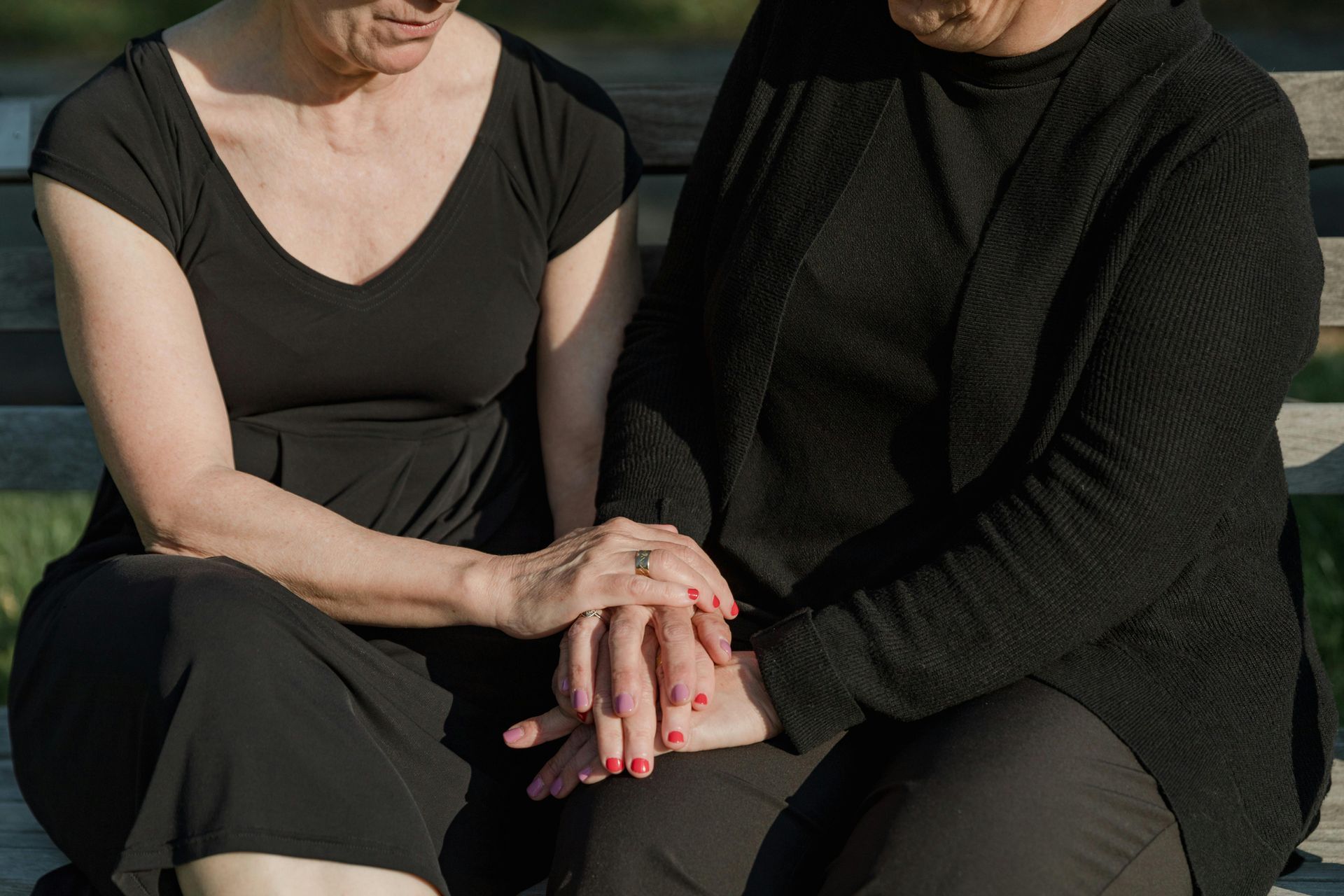
There's a type of person you probably know well. Maybe you are that person.
They're the one who always shows up. The one who holds it all together. The one who takes care of everyone around them — sometimes at great cost to themselves. And here's the thing that nobody talks about: they're also usually the one who feels the most alone.
My client was exactly that person. A healthcare professional by trade, she had built an entire identity around being the caregiver. It wasn't just her job — it was who she believed she was supposed to be.
So when a serious injury forced her to become the one who needed care… everything inside her started to crack.
In this post, I'm going to share her story — including the moment from her childhood that secretly started all of it. It's one of those stories where the subconscious connection will make you stop and think, "Oh. That's why."
Because what looked like a wound about feeling unloved was actually rooted in something much smaller — and much more fixable — than she ever imagined.
— — —
What Happened When She Got Hurt
💡 A serious injury shattered her sense of safety and invincibility, forcing her to confront both mortality and her deep belief that no one was allowed to take care of her.
My client came to me after just recovering from a significant physical injury — the kind that doesn't just hurt your body, it shakes something deeper inside you.
Before the injury, she had always believed she could keep going. Forever, if necessary. She genuinely thought she'd be working well into her 90s. She was someone who powered through, who showed up, who kept the wheels turning no matter what.
Then the injury happened. And suddenly, none of that felt true anymore.
What followed was what she described as a confrontation with mortality. For the first time, she felt genuinely unsafe in her own life. The invincibility she'd built her identity on — gone, just like that.
On top of that, the recovery itself brought up painful feelings. Her first daughter helped care for her at the beginning, but then my client felt she was "shuffled" to another daughter to look after. Whether that was the literal sequence of events or the way her subconscious interpreted things, the feeling was the same:
She didn't feel loved.
So she came to me. Not just to heal the injury — but to understand why she felt so unsafe, and so profoundly unloved.
— — —
The Surprising Thing We Found First
💡 Beneath her feelings of being unloved, the subconscious revealed a savior complex — a deep-seated belief that she was only allowed to be the one doing the caring, never the one receiving it.
When we began working together using my Accelerated Release Technique(TM) (ART), the first thing that surfaced wasn't what either of us expected.
A savior complex.
Now, at first glance, that might sound a little strange. A savior complex in someone who was already a healthcare professional? Isn't that just… part of the job?
Here's where it gets interesting. Yes, she was drawn to healing work. But the deeper pattern wasn't about choosing a noble career. It was a belief buried so far below the surface that she had never questioned it:
"It's my job to take care of everyone else. Nobody is supposed to take care of me."
That's not a career choice. That's a rule the subconscious wrote long ago — and it had been running the show ever since.
So the real question became: where did that rule come from?
— — —
The Life Event That Started Everything
💡 The subconscious traced the savior complex back to age six — a single moment of guilt about "burdening" her mother became the belief that shaped her entire life.
This is where the story gets really good. And surprising.
We drilled down into where this belief was first created, and the subconscious brought us back to when she was six years old. The emotions that surfaced around the event were telling: abandonment, doubt, and something that felt a little spiteful.
The memory that came up was deceptively simple.
She missed the school bus.
That's it. That's the big moment. A little girl, about to start kindergarten, somehow missed her bus home. It wasn't dramatic. It wasn't violent. It wasn't even particularly unusual.
But here's what happened inside her little mind in that moment.
She felt guilty. Deeply, crushingly guilty. Not because she was in trouble — but because her mom had to come pick her up.
"Mom shouldn't have to come and get me. I shouldn't have been irresponsible. I feel bad that I made Mom take care of me."
And in that tiny, quiet moment — with no drama, no yelling, no big traumatic event — her subconscious made a decision.
— — —
The Decision a Six-Year-Old Made That Changed Everything
💡 To avoid ever feeling that guilt again, her young subconscious decided she would always be the caregiver — never the one who needed help. One moment. One rule. A lifetime of consequences.
Here's what I find so fascinating about the way the subconscious works. It doesn't need a big event to write a rule. It just needs one moment where the emotion is strong enough.
In that moment on the sidewalk, waiting for her mom, my client's subconscious made a very logical (by a six-year-old's reasoning) decision:
"I never want to feel this guilty again. So from now on, I will always be the one taking care of others. I will never need anyone to take care of me."
And just like that, the savior complex was born.
Not from neglect. Not from abuse. Not from some huge, life-altering trauma. From a missed bus. From guilt. From a little girl who didn't want to be a burden to her mom.
That single belief then quietly shaped decades of her life: her career choice, her relationships, her inability to accept care when she needed it most, and — when the injury finally forced her to receive help — her overwhelming sense of being unsafe and unloved.
— — —
What Happened When We Healed It
💡 Once the guilt from the childhood event was released, the savior complex dissolved — and she immediately began to feel loved, safe, and genuinely happy again.
Once we identified that life event and the belief it created, the healing was straightforward.
Using ART, we worked through that memory — not to relive it or dwell in it, but to release the emotional charge that had been stored there for over forty years.
We helped her let go of the guilt. We cleared the belief that accepting help was something to be ashamed of. And we gave her subconscious permission to update that old, outdated rule.
The shift was immediate.
She told me afterward that she now knows — genuinely knows, not just intellectually understands — that she is loved. That she is safe. And that it is not only okay but necessary for her to let others take care of her sometimes.
"She is much, much happier."
That's what happens when you heal the root. Not a band-aid. Not a coping strategy. The belief that was quietly running the show gets updated, and the whole system recalibrates.
— — —
Why This Matters — Even If You've Never Missed a Bus
💡 Small childhood moments carry enormous weight in the subconscious. If you feel compelled to "always help" or struggle to accept care, there's likely a buried belief driving it.
You don't need a dramatic childhood to have a deeply held subconscious belief running your life. The subconscious doesn't rank experiences by how "big" they were to the outside world. It ranks them by how much emotion was attached at the time.
A missed bus. A thoughtless comment from a teacher. A moment when you felt like you weren't enough. These small, ordinary moments can become the foundation of beliefs that quietly govern everything — your relationships, your health, your sense of safety, your ability to feel loved.
If any of this resonated with you — if you recognize yourself in the pattern of always being the one who gives, the one who holds it together, the one who can't quite let yourself be taken care of — it might be worth exploring what's underneath that.
It doesn't have to be complicated. And it doesn't have to take years.
— — —
Ready to find out what's really going on underneath?
Book a session with me and let's see what your subconscious has to tell us. The first session is where the magic starts — and most people are surprised by how quickly things shift.
👉 Book Your First ART Session Here
Or if you'd like to chat first — no pressure, no commitment — book a discovery call here.
What is a savior complex and why do some people develop one?
A savior complex is an unconscious belief that you must be the one to take care of others — and that it is not okay for you to need help yourself. It often develops in childhood when a young person experiences guilt or fear around "being a burden," and the subconscious creates a protective rule to prevent that feeling from ever happening again.
Can childhood experiences really affect how you feel as an adult?
Yes. The subconscious stores emotional memories from childhood and continues to run the beliefs created during those moments. Even small, ordinary events — like missing a school bus — can become the foundation for beliefs that shape relationships, careers, and emotional health decades later.
How do you heal a savior complex?
Healing a savior complex starts with identifying the specific childhood event and belief that created it. Through techniques like ART (Accelerated Release Technique), the emotional charge attached to that memory is released, and the outdated subconscious belief is updated — often with immediate, lasting results.
Why do people who always help others struggle to feel loved?
When someone's identity is built around being the caregiver, accepting help or care from others can trigger deep guilt or a sense of wrongness. This creates a painful paradox: they give endlessly but struggle to receive — which can leave them feeling profoundly alone and unloved, even when surrounded by people who care about them.